Oct 13, 2023
In the modern industrial world, machines play an indispensable role. Among the various components of machinery, conveyor systems are pivotal in numerous industries. A small but vital component of these conveyor systems is the pulley-lagging rubber sheet. This article will help you understand what pulley-lagging rubber sheets are, their advantages, and their significance in the industrial world.
To begin with, a pulley is a wheel on an axle that is designed to support the movement and change the direction of a taut cable or belt. Pulleys are used in a variety of mechanisms, ranging from lifts to conveyor belts.
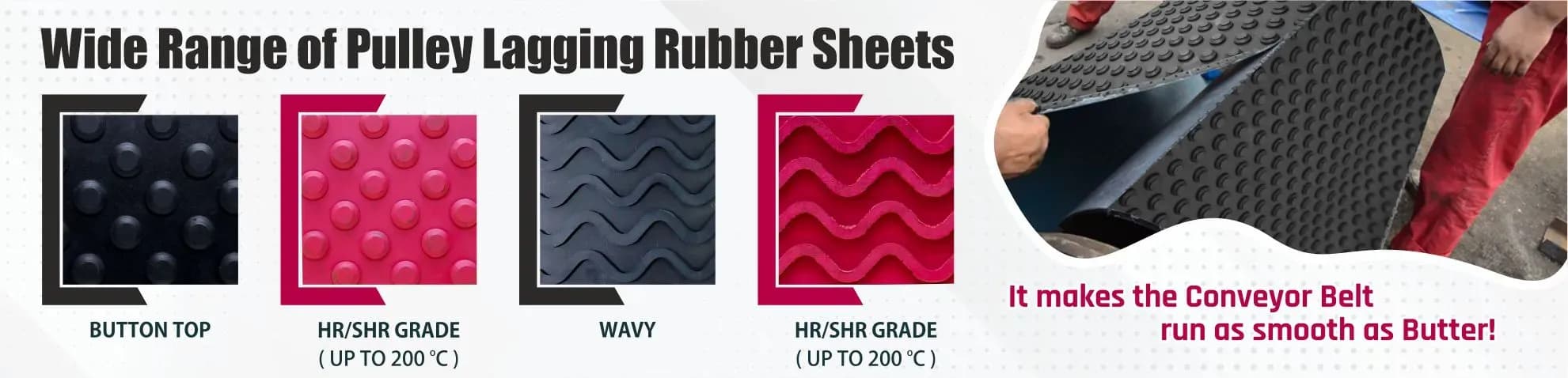
Lagging is the coating or layer applied to the surface of the pulley. Its primary function is to protect the pulley from wear and tear and to improve traction between the pulley and the belt. Imagine driving a car with bald tires on a rainy day; the chances of skidding increase. Similarly, without proper lagging, the conveyor belt might not have efficient traction with the pulley.
Pulley Lagging Rubber Sheet | |
|---|---|
Introduction | Pulley-lagging rubber sheets are vital components of conveyor systems, providing traction and protection against wear. |
Understanding the Basics | What is a pulley? A wheel on an axle is designed to support movement and change the direction of a cable or belt. Why is lagging necessary? It provides a coating to protect the pulley and improve traction. What is a Pulley Lagging Rubber Sheet? A rubber covering for pulleys in conveyor systems to prevent slippage. |
Advantages of Using Pulley-Lagging Rubber Sheets |
|
Types of Pulley Lagging Rubber Sheets |
|
Choosing the Right Pulley-Lagging Rubber Sheet | Consider the environment, materials conveyed, pulley size and speed, and operational requirements. |
Conclusion | Pulley-lagging rubber sheets are crucial for the smooth operation of conveyor systems, affecting efficiency and cost savings. |
FAQs about Pulley Lagging Rubber Sheet |
|
A pulley-lagging rubber sheet is a specific kind of lagging designed for pulleys in conveyor systems. It's a rubber covering that ensures that the conveyor belt stays firmly in contact with the pulley, preventing any form of slippage.
Implementing pulley-lagging rubber sheets in conveyor systems offers numerous benefits, enhancing the overall functionality and longevity of the system.
Description: Pulley-lagging rubber sheets are specifically designed to augment the grip between the conveyor belt and the pulley.
Implications: With improved traction, the chances of belt slippage significantly decrease. Belt slippage can often be a precursor to accelerated wear, inefficiencies, and operational hiccups. By reducing this slippage, the system operates more consistently and safely.
Description: The rubber sheet serves as a shield, ensuring that there's a layer of protection between the pulley and the conveyor belt.
Implications: This protective measure results in diminished wear on both the pulley and the belt. Consequently, both components enjoy an extended operational life, which translates to fewer replacements and less downtime.
Description: Wear and tear is a primary cause of frequent maintenance. By mitigating this wear, pulley-lagging rubber sheets inherently reduce the need for regular maintenance.
Implications: Less maintenance translates directly to cost savings. This not only includes the tangible costs of repairs and replacements but also the intangible costs associated with operational downtime.
Description: An efficient conveyor system is one that operates without disruptions and at its optimal capacity.
Implications: As pulley-lagging rubber sheets enhance traction and minimize slippage, the conveyor system can transport materials more swiftly and without any unwarranted stoppages. This boost in efficiency ensures that operations run smoothly, leading to better productivity and output.
One of the crucial benefits of pulley-lagging rubber sheets is the enhancement of safety. Slippage within conveyor systems can lead to potential accidents, harming equipment and workers. By implementing the right pulley-lagging rubber sheets, such risks are significantly reduced. As a result, operations can maintain a safer and more reliable working environment.
Understanding the different types of pulley-lagging rubber sheets is essential to ensuring the best fit for specific conveyor applications.
- Description: As the name suggests, this type of lagging has a smooth surface.
- Applications: It's particularly beneficial in environments prone to dirt and material buildup, as the smooth surface helps reduce accumulation.
- Description: This lagging is characterized by a distinctive diamond pattern on its surface.
- Applications: The design provides enhanced traction, making it suitable for applications where grip between the pulley and belt is essential.
- Description: Unlike traditional rubber lagging, ceramic lagging incorporates both rubber and ceramic tiles.
- Applications: This combination makes it ideal for heavy-duty scenarios that demand high levels of traction. The ceramic elements provide an increased grip, ensuring the conveyor belt remains in place even under strenuous conditions.
When selecting a pulley lagging rubber sheet, consider the specific needs of your conveyor system. The right choice can lead to improved performance, extended equipment lifespan, and most importantly, enhanced safety for all operators.
To optimize the performance of your conveyor system, the selection of the right pulley lagging rubber sheet is essential. This ensures the longevity and efficiency of the conveyor operations. The following factors should be meticulously evaluated before making your choice:
- Significance: The ambient conditions greatly influence the wear and tear on your conveyor system. A suitable lagging can help counteract environmental challenges.
- Factors to Consider:
- Wet Conditions: In damp or wet settings, a rubber lagging that offers high water resistance is crucial to prevent slippage.
- Dry Environments: Here, it's essential to select a lagging that can handle abrasion effectively.
- Clean Environments: A smooth surface may suffice, with a focus on ease of cleaning.
- Dirt-Prone Areas: Lagging that can handle accumulation and abrasion will be most suitable.
- Significance: Different materials exert varied stresses and can cause different types of wear on the pulley lagging.
- Factors to Consider:
- Coal: Coal can be abrasive. A lagging that's robust against abrasion can be suitable.
- Grains: These might be less abrasive but could pose slippage concerns.
- Chemicals: If the conveyor carries chemicals, the rubber sheet should be resistant to chemical degradation.
- Significance: The size and speed of the pulley can influence the amount of stress and strain on the lagging.
- Factors to Consider:
- Larger Pulleys: They might demand thicker or more durable lagging to distribute stresses evenly.
- Faster Pulleys: High speeds can generate more heat and wear. Opt for lagging that can dissipate heat effectively and handle the increased abrasion.
- Significance: How often and how long your conveyor operates can dictate the durability needs of the pulley lagging.
- Factors to Consider:
- 24/7 Operations: Continuous operations demand lagging that's not just robust but also boasts a long operational life. It should require minimal maintenance and offer consistent performance.
- Intermittent Operations: While still requiring durability, you might also focus on materials that can withstand long periods of inactivity without degrading.
In the orchestra of industrial machinery, the pulley lagging rubber sheet might seem like a minor player. However, its role is crucial for the smooth and efficient operation of conveyor systems. By providing better traction, reducing wear and tear, and enhancing safety, pulley-lagging rubber sheets prove their worth in the industry. Whether you're in the mining sector, agriculture, or any industry relying on conveyor systems, understanding and investing in the right pulley-lagging rubber sheet can lead to enhanced efficiency and cost savings.
- A pulley lagging rubber sheet is a specific kind of lagging designed for pulleys in conveyor systems. It's a rubber covering that ensures the conveyor belt stays firmly in contact with the pulley, preventing slippage.
2. Why is lagging necessary for pulleys?
- Lagging protects the pulley from wear and tear and improves traction between the pulley and the belt, similar to the importance of good tire tread on a vehicle.
- Some advantages include increased traction, protection against wear, reduced maintenance costs, improved efficiency, and enhanced safety.
- There are several types, including smooth rubber lagging, diamond-grooved rubber lagging, and ceramic lagging.
- The surrounding conditions, whether wet, dry, clean, or dirty, can influence wear and tear on the conveyor system, making it crucial to select a suitable lagging type to counteract these challenges.
- Different materials, like coal, grains, or chemicals, can exert varying stresses and wear on the pulley, necessitating a specific type of lagging that can handle those specific challenges.
- Larger and faster pulleys might require more durable lagging to handle increased stresses, heat, and wear.
- The frequency and duration of conveyor operations dictate the durability needs of the pulley lagging, with continuous operations requiring more robust and long-lasting solutions.
- By improving traction and reducing the chances of belt slippage, pulley-lagging rubber sheets significantly lower the risk of potential accidents, ensuring a safer working environment.
- Considerations should include the environment, the materials being conveyed, pulley size and speed, and specific operational requirements.
- By reducing wear and tear, the frequency of maintenance decreases, leading to both direct cost savings from repairs and replacements and indirect savings from reduced operational downtime.
Industries like mining, agriculture, or any sector relying on conveyor systems greatly benefit from the use of pulley-lagging rubber sheets.
In conclusion, pulley lagging rubber sheets play a crucial role in enhancing the efficiency and longevity of conveyor systems. With their durable construction, excellent traction, and resistance to wear and tear, these rubber sheets offer reliable protection for conveyor pulleys, reducing slippage and minimizing maintenance costs. By investing in high-quality pulley-lagging rubber sheets, businesses can optimize their material handling processes, improve workplace safety, and ensure smooth operations for years to come. Trusting in the expertise of reputable manufacturers like us ensures that you receive top-notch products that meet your specific requirements and exceed your expectations.