Oct 17, 2023
In the world of conveyor belts, ensuring that your equipment operates at its peak efficiency is of the utmost importance. This efficiency can be seriously hindered by faulty or ineffective splices. For decades, vulcanizing cement has been the go-to solution for professionals seeking dependable conveyor belt splicing. In this article, we’ll dive deep into what vulcanizing cement is and introduce you to a revolutionary product that promises superior performance: the OM 2000.
Aspect | Detail |
|---|---|
Product | OM 2000: Vulcanizing Cement |
Use | For cold vulcanization of conveyor belts, bonding without heat |
Adhesive Strength | Enhanced adhesive formula for extreme operational conditions |
Lifespan | Extended lifespan, reducing maintenance frequency |
Resistance | Highly resistant to humidity and temperature variations |
User-Friendly | Easy application, suitable for those new to conveyor belt splicing |
Formula | Flexible formula that adapts to specific belt characteristics |
Economic Advantage | Cost-effective with long-term savings due to longevity and reduced maintenance |
Transition | It is recommended to consult with professionals for suitability |
Vulcanizing cement is a critical adhesive used in the process of Cold vulcanization, which involves bonding two ends of a conveyor belt together Without heat. The primary role of this cement is to ensure a seamless and strong bond between the two belt ends, guaranteeing smooth operation and preventing potential failures.
However, like all products, vulcanizing cement has its limitations. Over time, the adhesive strength might wane, especially under conditions of extreme stress or temperature variations. This is where the need for a more reliable and durable alternative comes into play.
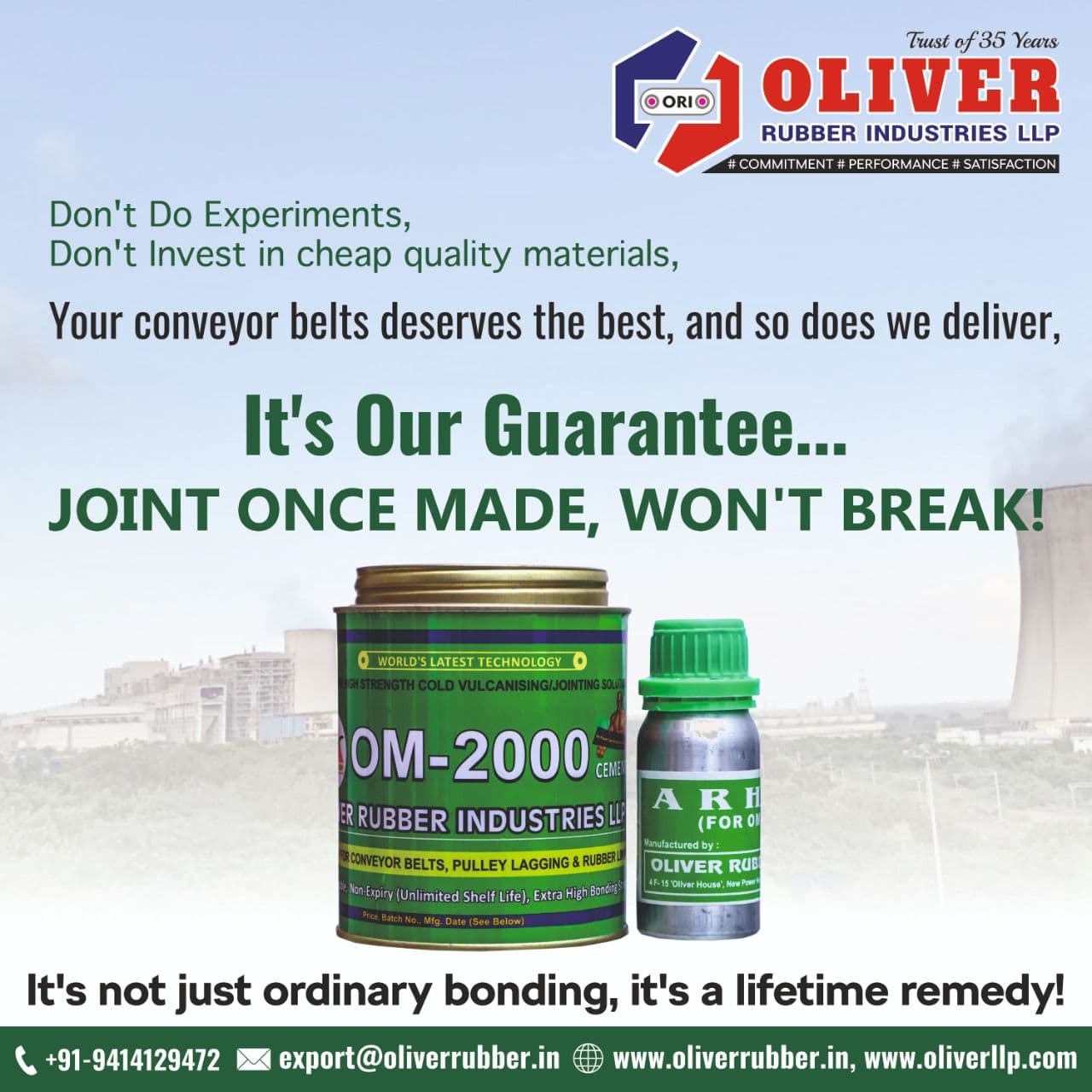
OM 2000 stands tall as a testament to innovation in the field of conveyor belt splicing. Crafted with meticulous precision and backed by years of research, this product is not just another adhesive, but a revolution in the domain of vulcanizing cements.
1. Enhanced Adhesive Strength:, Unlike traditional vulcanizing cements, OM 2000 boasts a superior adhesive formula, ensuring that the splices remain intact even under extreme operational conditions.
2. Longer Lifespan: With OM 2000, you can expect the splices to last significantly longer, reducing the frequency of maintenance and ensuring that your conveyor belts continue to function seamlessly.
3. Resistant to Environmental Factors: Whether it’s high humidity or fluctuating temperatures, OM 2000 remains unfazed, ensuring that the bond stays strong irrespective of external conditions.
4. User-Friendly: Even if you're new to conveyor belt splicing, OM 2000’s easy-to-use formula ensures a hassle-free application every time.
Without diving too deep into the technicalities, let's understand why OM 2000 is a game-changer. Traditional vulcanizing cements rely on a set formula that, while effective, may not offer optimum bonding for all types of conveyor belts. OM 2000, on the other hand, has been developed with a flexible formula, which means it adapts to the specific characteristics of the belt it is applied to, offering a customized bonding solution.
From an economic perspective, investing in OM 2000 is a wise choice. Given its longevity and reduced maintenance requirements, businesses can expect significant savings over time. When you factor in the potential losses due to conveyor belt malfunctions with traditional vulcanizing cements, the cost benefits of switching to OM 2000 become even more apparent.
While the conveyor belt industry has trusted vulcanizing cement for years, it's time to embrace change and innovation for the better. With its unparalleled benefits and promise of superior performance, OM 2000 is set to redefine the standards of conveyor belt splicing.
For businesses looking to optimize their operations and reduce potential downtimes, making the shift to OM 2000 is not just an option but a necessity. Remember, in a world where efficiency and reliability are paramount, settling for anything less than the best isn’t an option.
The conveyor belt industry, like all others, is evolving. And with the introduction of products like OM 2000, we’re witnessing a shift towards smarter, more efficient solutions. So, if you're in the market for a reliable vulcanizing cement alternative, consider OM 2000 – where innovation meets excellence.
(Note: It’s always advised to consult with professionals when making changes to critical operational components. Ensure that OM 2000 is the right fit for your specific conveyor belt setup before transitioning.)
- Vulcanizing cement is an adhesive used in the cold vulcanization process, primarily for bonding two ends of a conveyor belt together without the use of heat.
- The main role of vulcanizing cement is to guarantee a seamless and robust bond between the two ends of the conveyor belt, ensuring smooth operations and preventing possible breakdowns.
- Yes, over time and under certain conditions, such as extreme stress or temperature fluctuations, the adhesive strength of traditional vulcanizing cement can decrease.
- OM 2000 is a product of extensive research and innovation in the conveyor belt splicing field. It boasts superior adhesive strength, a longer lifespan, resistance to environmental factors, and user-friendliness.
- Unlike traditional cements that have a set formula, OM 2000 is developed with a flexible formula. This means it adjusts to the specific characteristics of the conveyor belt to which it's applied, offering an optimized bonding solution.
- Given OM 2000's long-lasting nature and reduced maintenance needs, businesses can expect substantial savings in the long run. Considering the potential costs due to malfunctions with traditional cement, OM 2000 becomes a cost-effective alternative.
- No. While change can seem daunting, the user-friendly nature of OM 2000 ensures a smooth transition. However, it's always recommended to consult with professionals to ensure OM 2000 is suitable for your specific conveyor belt setup.
- Yes, whether faced with high humidity levels or temperature fluctuations, OM 2000 maintains its bond strength irrespective of external factors.
- Absolutely. OM 2000 is designed to be user-friendly, ensuring that even those new to conveyor belt splicing can apply it without any hassles.
- The conveyor belt industry is continuously evolving, and products like OM 2000 are leading the shift towards smarter and more efficient solutions. Investing in OM 2000 means aligning with the future of the industry.
Remember, for specific applications or unique situations, it's always a good idea to consult with a conveyor belt expert or professional. In conclusion, Vulcanizing Cement plays a vital role in the rubber industry, serving as a reliable adhesive for bonding rubber components. Its exceptional bonding strength, durability, and heat resistance make it indispensable for various applications, from repairing conveyor belts to assembling rubber parts in automotive and industrial settings. With its versatility and reliability, Vulcanizing Cement continues to be a cornerstone of rubber manufacturing, ensuring the integrity and longevity of rubber products across diverse industries.