Oct 12, 202312 min read
Author
Oliver Team
Primary Topic
manufacturer conveyor belt joint solution price
Record Source
Database
Author
Oliver Team
Primary Topic
manufacturer conveyor belt joint solution price
Record Source
Database
You've probably noticed them, perhaps without giving them much thought. At airports, they gracefully slide your luggage to and from the plane. In factories, they tirelessly move products from one point to another. These are conveyor belts, the silent workhorses of the modern world, ensuring things get to where they need to be.
But there's a little secret to these belts. They aren't just one long, unbroken strip. Instead, they start and end somewhere. And at that ending point, they meet their beginning, forming a continuous loop. But how do we get these two ends to become best friends and stay together?
Join me on this journey as we explore the fascinating world of how conveyor belts are joined. Trust me, there's more to it than meets the eye!
Conveyor Belt Joint Solutions | |
|---|---|
Introduction | Exploring the significance of conveyor belts and the importance of joining their ends to form a continuous loop. |
1. What's a conveyor belt? | A long, moving belt that carries objects on its surface, akin to a moving sidewalk, is used in various places like airports and factories. |
2. Why We Need to Join the Belt Ends | The ends of the belt must be securely joined to create a continuous loop for the conveyor to function correctly. |
3. How Do We Stick the Belt Ends Together? | Methods include using heat (hot vulcanization), glue (cold vulcanization), or clips (mechanical fasteners), each with its own specific application and benefits. |
4. Being Safe is Important | Safety precautions include ensuring the machine is off and wearing protective gear during the belt joining process. |
5. What's Next for Joining Belts? | Future advancements may include robot assistance, eco-friendly glues, and smart belts that signal when they need maintenance. |
Conclusion | A reflection on the intricate process of joining conveyor belts and its crucial role in the seamless operation of various industries. |
Imagine you have a really long belt, just like the one you might wear around your waist. But instead of it being a couple of feet long, imagine it's so long that you can't see where it starts or ends. Now, lay that belt out in a big circle. This big circle is what we call a "conveyor belt."
These conveyor belts aren't just lying flat on the ground. They're placed on top of special wheels that help them move. When these wheels start turning, the belt moves along with them.
And that's the magic of it! As the conveyor belt moves, it can carry things on its surface. Imagine putting a box on one side of this moving belt. As the belt moves, the box will travel to the other side without anyone having to push or carry it. It's like a moving sidewalk for objects.
This simple idea helps in many places—airports, factories, and even some stores. Next time you see one, you'll know how this big circle of a belt works!
Think about when you tie your shoelaces. You take the two ends and tie them together so they form a loop to hold your shoe tight. Similarly, the conveyor belt must be one big loop to do its job properly.
This means the two free ends of the belt have to be joined together to create that loop. We can't just tape them or simply press them together; they need to be securely stuck or fastened. This sticking process is quite important.
Imagine if the joining was weak and you were watching your suitcase at the airport move on the conveyor. If the belt breaks at the joint, your suitcase, along with many others, might stop moving or even fall off! That would cause a lot of confusion and delays. That's why it's super important to make sure the belt's ends are joined the right way. If not, things can go wrong, and it's not a pretty sight!
You know how, when you're baking, heat changes the dough into a delicious bread or cookie? Similarly, when joining the two ends of a conveyor belt, heat can be used to change and meld the materials, making them stick together.
Imagine taking two pieces of chocolate. If you heat them slightly, they'll melt a bit. If you then press the melted sides together and let them cool, they'll stick together as one piece. In a similar way, we use heat to meld or "bake" the ends of the conveyor belt so they become one continuous loop.
This method of joining, using heat, is very reliable. The bond it creates is strong, ensuring the belt can handle heavy loads and keep moving for a long time without coming apart. However, just like baking needs the right oven temperature and baking time, this method requires specific tools to apply the right amount of heat and pressure. And, of course, just as you'd want a skilled baker to bake the perfect bread, you'd need trained people to ensure the belt is joined perfectly.
Think back to when you were younger, and you might've used glue to stick two pieces of paper together. The glue made a bond that held the papers close. Similarly, when we want to join the ends of a conveyor belt, we can use a kind of "glue" or adhesive. But it's not just any ordinary glue you'd find in a school bag; it's a special kind designed for heavy-duty jobs like this.
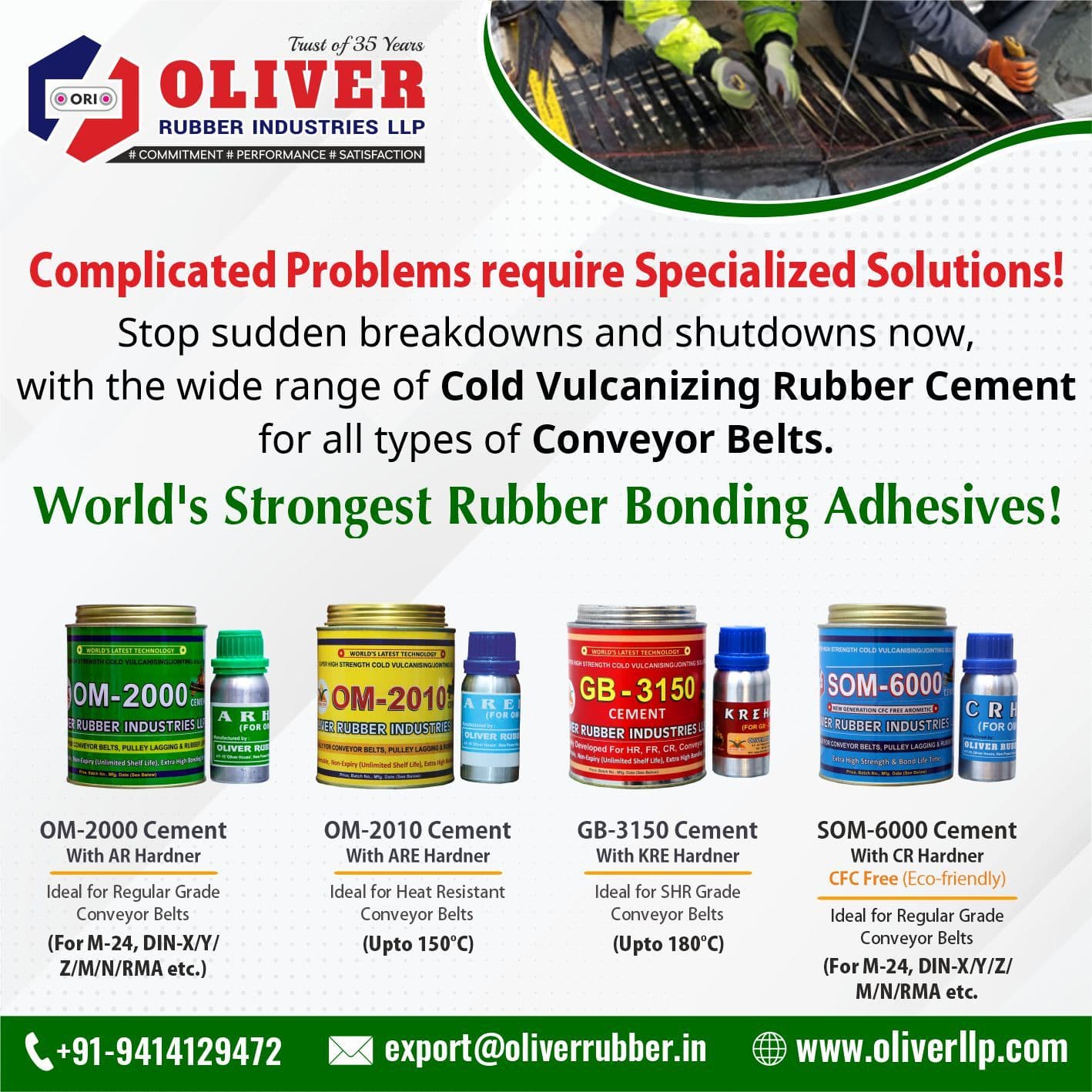
Imagine if you had a piece of rubber and tried to use regular paper glue on it. It probably wouldn't stick very well, right? That's because rubber needs a stronger, more flexible adhesive. This is where "Rubber Cement" comes into play. It's a special type of glue made just for materials like rubber, making it perfect for our conveyor belts.
Using rubber cement is especially handy when using heat isn't an option. Maybe the place is too sensitive to heat, or perhaps the belt's material doesn't respond well to it. In such cases, this special adhesive becomes a lifesaver. With it, we can ensure that the belt's ends stick together firmly, allowing it to do its job smoothly and efficiently.
Remember when you have a pile of papers and you want to keep them together? You might use a paperclip or a pin to hold them in place. Similarly, when joining the ends of a conveyor belt, we can use things that resemble clips or pins. They grip the two ends of the belt and hold them together, making the belt a complete loop.
Now, think of these clips or pins as being a bit like the snaps or buttons on a shirt. They're super handy because you can quickly snap or button them up. In the same way, using clips or pins for the conveyor belt is faster than some other methods, making it a go-to choice when time is crucial.
However, just like sometimes a shirt button might come loose or pop off if it's old or not secured properly, these clips and pins on the conveyor belt can also face similar issues. They might wear out, loosen up, or even detach if put under too much strain.
This is why it's crucial to keep an eye on them. Imagine if a button came off your shirt; you'd notice and probably fix it, right? Similarly, regular checks on these belt clips or pins are essential. If we spot any that look a bit worn out or are not holding as they should, it's time to replace or tighten them, ensuring the conveyor belt stays safely and smoothly on its track.
Whenever someone is joining belts, they must:
Make sure the machine is off. Safety first!
Wear safety gear like gloves or goggles.
Keep checking the joint. If it looks old or weak, fix it soon!
Things are always changing. Soon, we might have:
Robot helpers: Robots might help in joining belts very accurately.
Friendly glues: glues that are kinder to our planet.
Smart belts: belts that can tell us when they need fixing.
Joining belts might sound simple, but it's super important. The next time you see a moving belt, remember the magic that's making it stay in one big loop!
When we think of everyday items and processes, we might overlook how complex some things can be behind the scenes. Joining conveyor belts might come across as a basic task, like tying a simple knot, but there's so much more to it. It's a blend of science, technique, and careful consideration, ensuring everything runs as smoothly as possible.
Just picture this: a long, moving platform carrying countless items, all thanks to the perfect join that keeps it moving in harmony. It's almost like a dance, where every step needs to be precise to keep the rhythm going. The joining of a conveyor belt is an essential step in the dance of machinery.
So, the next time you're at an airport, a factory, or even a grocery store with a moving belt, pause for a moment. Appreciate the unseen craftsmanship that ensures that the belt remains a single, continuous loop. It's a small wonder in our everyday world, a testament to human ingenuity, ensuring efficiency and safety in numerous industries.
Conveyor belt jointing is the process of connecting the two ends of a conveyor belt to make it a continuous loop.
Jointing ensures that the belt runs smoothly and safely. A poorly jointed belt can break or malfunction, causing delays or even accidents.
The primary methods are hot vulcanization, cold vulcanization, and using mechanical fasteners.
Each method has its advantages. Hot vulcanization offers a strong bond; cold vulcanization is useful where heat can't be applied; and mechanical fasteners are quick to install. The best method depends on the belt's use and material.
No, cold vulcanization requires a special adhesive formulated for conveyor belts. Regular glue won't provide the needed strength.
Yes, they involve clips, pins, or other fixtures that are physically attached to the belt ends. They might be noticeable, but they're designed to ensure smooth operation.
The time varies depending on the method and belt size. Hot vulcanization might take several hours, while using mechanical fasteners can be quicker.
Regular inspections are crucial. Depending on the belt's usage, checking the joint monthly or even weekly is a good practice.
Often, a worn-out joint can be repaired without replacing the entire belt. However, if the belt itself shows signs of significant wear, it might be time for a replacement.
Yes, as technology advances, there are continuous improvements in adhesives, fastener designs, and vulcanization methods to ensure better and longer-lasting joints.
In conclusion, effective conveyor belt joint solutions play a pivotal role in ensuring smooth and efficient material handling operations across various industries. By employing high-quality jointing techniques and materials, such as vulcanization or mechanical fasteners, businesses can minimize downtime, enhance conveyor belt lifespan, and optimize productivity. Whether it's for heavy-duty mining applications or delicate food processing environments, investing in reliable conveyor belt joint solutions is essential for maintaining operational efficiency and maximizing profitability. Remember, choosing the right jointing method and partnering with experienced suppliers are key factors in achieving long-term success with conveyor belt systems.
Feb 27, 2026