Product Overview
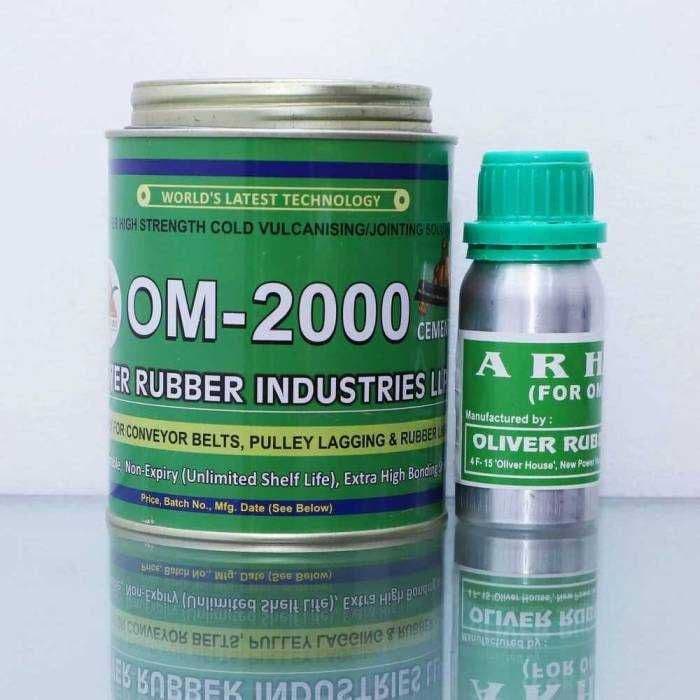
A Tin Pack of 1kg Cold Vulcanizing Adhesive with Hardener in a 70gm Aluminium Bottle for Conveyor Belt Jointing
Product Overview
Feature | Description |
Product Name | OM 2000 Cold Vulcanizing Adhesive |
Product Image | |
Bonding Strength | Very high |
Application Temperature | Room temperature up to 60°C |
Curing Speed | Fast |
Shelf Life | Indefinite |
Packaging | 1 kg of cement and 70 gms of hardener |
Color | Green (cement color) |
Application Time | Maximum of 10 minutes |
Suitable For | Rubber lining, conveyor belt splicing & jointing, pulley lagging, tank lining, etc. |
Surfaces Applicable | Rubber to rubber, rubber to metal, metal to fabric, rubber to fabric, including sailcloth and nylon |
Additional tools are required. | No |
Enhancers | Adhesive Primer spray and belt cleaner (surface activator) available for improved bonding |

OM-2000 - Cold Vulcanizing Adhesive (For Canada)
Repair and jointing employ OM 2000 Cold Vulcanizing Adhesive, which has a very high bonding strength. Additionally, jointing and repairing rubber to rubber, rubber to metallic surfaces, metal to fabric, and rubber to fabric are done using this cold vulcanizing adhesive. OM 2000 is a multipurpose, double-ingredient adhesive that works well for rubber lining, conveyor belt splicing & jointing, and solidifying regular-grade conveyor belts like M-24 Grade, DIN-X/Y/Z Grade, M/N/RMA, etc. at normal temperature and environment.
It's an ideal substitute for the hot bonding method used for splicing & vulcanization of conveyor belt endless joints, emergency repair, reconditioning of old belts, longitudinal-cut repair, pulley lagging, & tank lining at room temperature. With its fast speed of solidifying, anti-corrosion, and resistance to aging in normal temperatures, this cold vulcanizing adhesive offers a secure joint connection of conveyor belt in material cores such as sailcloth, nylon, etc.
One of the greatest adhesives for industrial use is OM 2000, which bonds the conveyor belt quickly and effectively. It is a two-part cold vulcanizing cement that forms a quick bond to materials, including rubber, metal, and cloth, when combined with AR hardener. Additionally, it has the viscosity of a brushable liquid for bonding that will persist for a long time and doesn't require any additional pressure to make the bond firm when applied. This liquid adhesive cures at room temperature up to 60°C (slightly higher for rubber-to-metal bonds)
To enhance the bonding strength even further, an enhancer in spray form can be used, and a belt cleaner can also be used, which works as a surface activator.
✓ For Rubber Lining
✓ For overlay or coating of rubber sheets
✓ For Conveyor Belt Jointing and repair
✓ For Bonding Rubber to Metal
✓ For Bonding Rubber to Rubber
✓ For Bonding Rubber to Fabric
Applications and Instructions
Application | Instructions |
Rubber Lining | Clean and dry the surface, apply the primer and hardener mix, add more coats if necessary. |
Conveyor Belt Jointing and Repairing | Make the surface rough, use Belt - o - cleaner, then apply the adhesive mix. |
Bonding Rubber to metal or fabric | Apply the adhesive mix after surface preparation, ensure a dry and clean surface for bonding. |
Overlay or coat of rubber sheets | Follow general application steps; clean, apply primer and hardener, and let it dry. |
Pulley lagging & tank lining | Use the adhesive mix on a prepared surface, apply multiple coats for stronger bonding. |
Testing after Application | Wait for up to 1 hour before operating the Conveyor Belt and then test. |
➤ Always clean and dry the surface where applied.
➤ Make the surface rough before applying the solution and remove any loose material.
➤ Use belt-oo cleaner to clean the rough surface area for better results.
➤ Once the surface is dry, apply the mixer of primer and hardener.
➤ After the first coat is dry, gently apply a few more coats of the same mixer to the same surface to make the bond strong.
➤ Once the application is done, you should wait for up to 1 hour before operating the conveyor belt and then test it.
As we are all fully cognizant, the smoothness of any production depends heavily on the conveyor belts, whether it's pre-production, which involves moving light to heavy raw materials from one location to another, or post-production, which involves moving finished products for further processing. The technicians there consider conveyor belts to be their closest buddies and constant workers.
As you are all aware, with a fast-growing globe and constant technological improvement, manufacturing in India is playing a critical role in this expanding world as the production rate is increasing at a faster rate, and conveyor belts are the backbone of all such industries. Essentially, manufacturing facilities place a lot of emphasis on the quality of production because they desire to deliver the best products possible to their clients.
Continuous working entails continuous load, and in order to prevent conveyor belt failure as a result, they need periodic maintenance and repair to ensure that they remain sturdy for a longer amount of time, reducing industrial shutdown times and increasing efficiency. There are a significant number of products being produced and sold right now for the cold vulcanization of conveyor belts. The majority of them are cheap in terms of both cost and quality, but due to some reasons, personnel responsible for conveyor belt maintenance have no choice but to purchase items that might slowly deteriorate the belts.
Ordinary conveyor belt splicing kits become a nightmare because the bonding abilities are limited and the bond repeatedly fails, making the issue permanent and the treatment transient. With more than three decades of experience, Oliver Rubber Industries LLP created a permanent solution and introduced OM-2000, the top cold vulcanizing adhesive on the market at the moment. Any product's popularity and efficacy are determined by demand, which is precisely why this is the most sought-after cold vulcanizing adhesive on the planet.
Conveyor belt jointing is a crucial process used in the installation, repair, and maintenance of conveyor belts. Here's a closer look at the main uses of conveyor belt jointing:
During the initial installation of a conveyor belt, jointingis employed to join the two ends of the belt together, creating a continuous loop. This ensures smooth and uninterrupted material handling along the conveyor system.
Conveyor belts can suffer from various types of damage over time, such as cuts, tears, or punctures. Splicing allows for the repair of damaged sections by removing the affected area and connecting the remaining belt ends. This restores the belt's integrity, allowing it to resume normal operation without the need for a complete replacement.
In situations where a conveyor system needs to be extended or modified, splicing enables the addition of new sections of the belt to the existing structure. By splicing the new and existing belts together, the conveyor system can be expanded or reconfigured to meet changing operational requirements.
Conveyor belt jointing is also essential when replacing an old or worn-out belt. By splicing the new belt onto the conveyor system, the old belt can be safely and efficiently removed, minimizing downtime and ensuring a seamless transition.
Cold vulcanizing adhesive, also known as cold bond adhesive, is a type of adhesive used in the repair and splicing of conveyor belts and rubber components in various industries, including mining, manufacturing, and agriculture. Unlike hot vulcanization, which involves high temperatures and pressure to bond rubber materials, cold vulcanizing adhesive allows for repairs and splicing to be done at room temperature or with minimal heat.
Before applying the adhesive, the damaged or splicing areas of the rubber material need to be cleaned and roughened to ensure good adhesion. This may involve grinding or sanding the surfaces.
The cold vulcanizing adhesive is applied to both surfaces that need to be bonded or spliced together. It is essential to apply the adhesive evenly and thoroughly to ensure a strong bond.
After applying the adhesive, the two surfaces are brought together and tightly pressed. Some cold-vulcanizing adhesives require curing at room temperature, while others may require a specific curing temperature or time.
Once the adhesive has cured, the repaired or spliced area is typically tested for its strength and integrity. This may involve conducting pull tests or other quality control measures to ensure the bond is secure.
Cold vulcanizing adhesives have several advantages and are commonly used in situations where hot vulcanization is not practical or cost-effective.
Some benefits of cold vulcanization include:
Cold vulcanization can be performed without the need for specialized equipment to generate high temperatures, making it suitable for on-site repairs.
Cold vulcanizing adhesive often cures faster than hot vulcanization, allowing for quicker repairs and less downtime.
It can be used for various rubber materials, including conveyor belts, gaskets, and rubber linings.
The equipment and energy costs associated with hot vulcanization are typically higher than those for cold vulcanization.
However, it's essential to choose the right type of cold vulcanizing adhesive for your specific application and follow the manufacturer's instructions carefully for proper bonding and long-lasting results. Additionally, cold-vulcanized repairs may not be as durable as hot-vulcanized ones in high-stress or high-temperature environments.
The following characteristics make this product the best:
---
At Ultra Tech Cement, we had a big problem. Our conveyor belts, which move cement around our factory, kept breaking. Every time they broke, we had to stop work to fix them. This meant losing time and money.
One day, someone told us about a special glue called OM 2000 Cold Vulcanizing Adhesive. We thought, "Why not give it a try?"
This glue was easy to use. When we used it to stick the broken parts of the conveyor belt, it dried fast. And the best part? The belt became very strong, just like new!
1. Less Waiting, More Working: **Our belts didn't break as often. This meant we could do more work and lose less time.
2. Save money: We didn't need to fix the belts all the time. So, we saved money!
3. Happy Workers: Our workers were happy because they didn't need to stop and fix the belts all the time.
"We love the cold vulcanizing glue, OM 2000. Our factory is running better, and our workers are happy.
Thank you!" -
Mr. Ramesh, who looks after the factory at Ultra Tech Cement,
---
A1: Cold Vulcanizing Adhesive is primarily used for repairing and jointing applications like bonding rubber to rubber, rubber to metal, metal to fabric, and rubber to fabric. It's an ideal solution for conveyor belt splicing, jointing, rubber lining, and other related uses.
A2: Cold Vulcanizing Adhesive serves as an alternative to hot bonding. It offers a secure joint connection, cures at room temperature (up to 60°C for rubber-to-metal bonds), and provides resistance against aging and corrosion at normal temperatures.
A3: The surface should be cleaned, dried, and roughened. After using a belt cleaner, apply a mix of primer and hardener. Once the first coat dries, add more coats for a stronger bond. Let it sit for up to an hour before operating the conveyor belt.
A4: Yes, an enhancer spray can be used to further increase bonding strength, and a belt cleaner can work as a surface activator.
A5: Cold Vulcanizing Adhesive, developed with extensive expertise, is recognized as a top choice in the market. Its demand attests to its quality and effectiveness, distinguishing it from inferior products that can degrade conveyor belts.
A6: Cold vulcanization doesn't require heat, allows faster repairs, is versatile, and is typically more cost-effective than hot vulcanization. However, its durability in high-stress or high-temperature environments might be less than that of hot vulcanization.
A7: Cold Vulcanizing Adhesive is easy to apply, dries quickly, offers durable and reliable bonding, has an indefinite shelf life, comes in a black cement color, and efficiently minimizes downtime in industrial operations.
A8: Yes, a business named Ultra Tech Cement experienced a significant transformation after using Cold Vulcanizing Adhesive. Their conveyor belts, which frequently broke, became robust and more reliable, reducing downtime and saving costs.
A9: Yes, we have a tutorial available that provides step-by-step instructions.
A10: The adhesive dries within 1 hour of application.
If you have any more questions or require additional details, feel free to ask or check out our tutorial for more guidance.
---
"Using OM 2000 Cold Vulcanizing Adhesive has been a game-changer for us. It has made our conveyor belt repair and splicing tasks much more efficient. Truly reliable!"
---
"OM 2000 Cold Vulcanizing Adhesive is a product we trust. It holds up to our rigorous steel production demands, ensuring our conveyor systems stay in top shape. Highly recommend!"
---
"In the cement industry, downtime can be costly. With OM 2000, we've seen a drastic reduction in our downtime. It's reliable and easy to apply. A great choice for our conveyor belt needs."
---
"We prioritize quality in all aspects of our operations. OM 2000 fits right in with its impeccable performance in conveyor belt repair and splicing. We're very satisfied."
---
"Every time we use OM 2000 Cold Vulcanizing Adhesive, we're reminded of why we chose it. Excellent adhesion, durability, and consistency. "
---
"OM 2000 ensures that our conveyor belts are repaired effectively and last longer. It's been an essential addition to our maintenance toolkit. Top-notch product!"
---
Video
Related Products
Cold VulcanizingCold Vulcanizing Cement
 Cold Vulcanizing
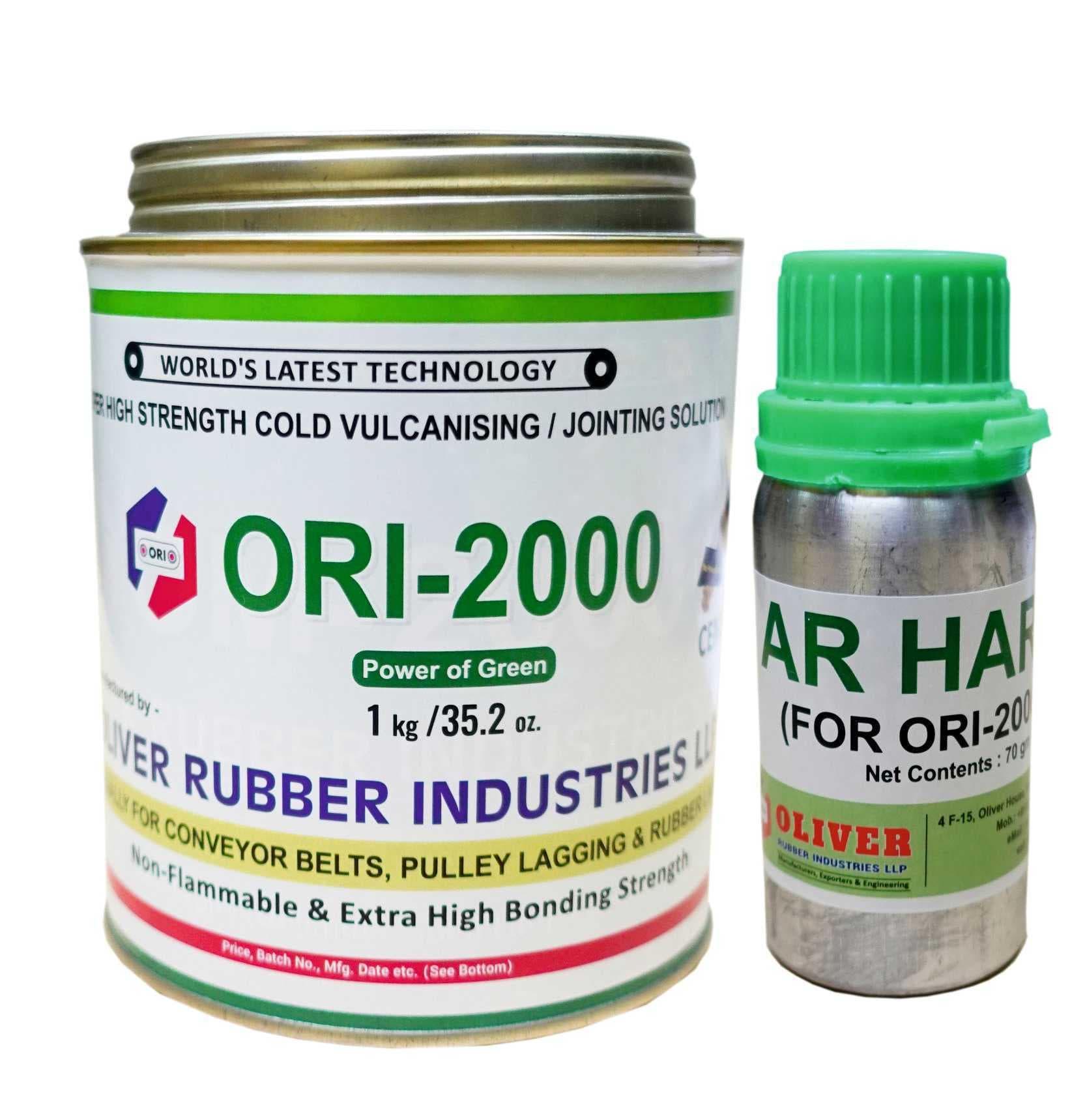
A replica of vulcanizing rubber cement OM 2000
 Cold Vulcanizing
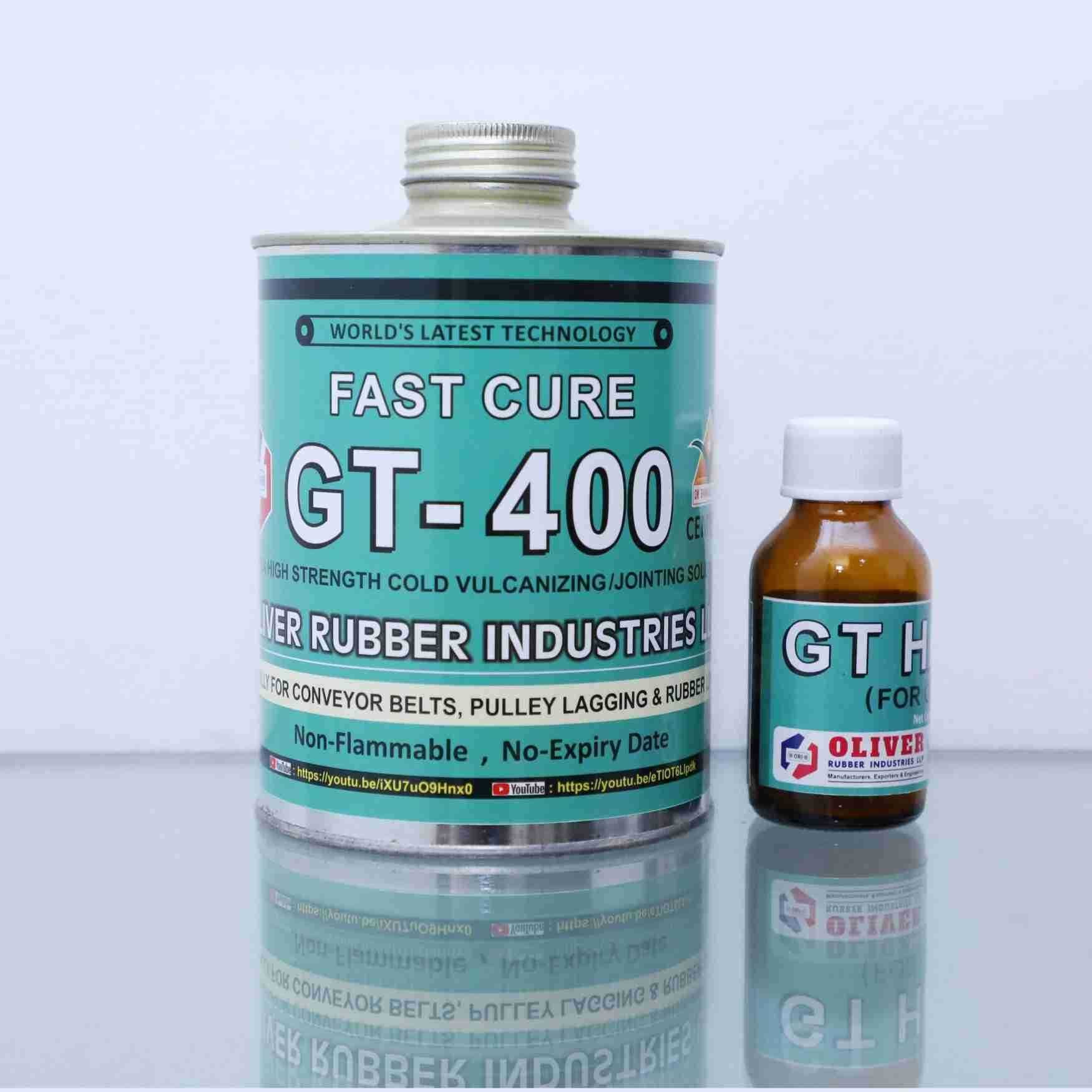
Cold Vulcanizing Solution for quick belt splicing at an extremely low cost.