.jpeg&w=2048&q=75)
Product Overview
Hot Vulcanizing - Kit contains the following items * Hot vulcanizing black solution * Cover Compound * Insulation Compound * Tie Gum/Bonder Rubber Strips
We have developed a kit for hot vulcanizing to perform extremely effective repairs and super robust jointing of M-24 grade conveyor belts, which includes all of the specialist tools required to accomplish conveyor belt hot bonding using the hot vulcanizing procedure. This kit for conveyor belts does extend the longevity of a belt.
Aspect | Detail |
|---|---|
Product | Hot Vulcanizing Kit for M-24 Grade Fabric Conveyor Belts |
Purpose | For performing effective repairs and robust jointing of M-24 Grade conveyor belts |
Kit Includes | Specialist tools, hot splicing black solutions (ST-9000, ST-6000), cover compound, insulation compound, tie gum/bonder rubber strips |
Vulcanizing Procedure | Clean and dry conveyor belt, apply solutions and compounds, and use vulcanizing press for heat and pressure |
Ambient Conditions | The temperature of the belt, splicing products, and environment must be between +50°F and +115°F |
Benefits | It extends the longevity of the belt and ensures high bonding strength, durability, and safety during maintenance |
Workplace Requirements | Clean work area, proper safety measures, avoid humidity effects, prevent heat loss, and ensure safety precautions |
Application | Manufacturing units with FR-grade conveyor belts are also available for other grades like M-24, SHR, and steel cord belts |
Advantages | Strong, durable bond, improved belt performance, resistance to wear and tear |
Hot Vulcanizing vs Cold Vulcanizing | Hot vulcanizing offers superior bonding strength and durability compared to cold vulcanizing |
Price | Varies based on size and complexity of the job; contact Oliver Rubber Industries LLP for a quote |

There are a few things that need to be considered and followed, and they are:
A clean work area, cautious usage, and careful application of the splicing materials are vital for ensuring the quality and longevity of a hot splice.
Scrape off contamination that is water-soluble (such as salt or fertilizers), then rinse with water.
Use OLIVER Rubber's "Belt-O-Cleaner" Cleaning Solvent to remove oily or greasy materials.
*Before continuing with the preparatory process, dry the belt if necessary using the drying hood, air dryer, or the heated bottom portion of the vulcanizing press.
The temperature of the fabric belt, the splicing goods, and the surrounding atmosphere must all range from +50°F to +115°F.
Any effects of humidity must be completely avoided, such as the development of condensation water (due to temperatures falling below the dew point).
Prevent heat loss from strong air currents (wind).
If necessary, take the proper safety measures, such as:
Set up a tent to shield the work area from unfavorable weather conditions (strong sunshine, rain, wind, and dust).
Use the drying hood, air dryer, or the bottom portion of the preheated vulcanizing press to warm up the belt's splice region.
* Hot vulcanizing Black Solution
* Cover Compound
* Insulation Compound
* Tie Gum/Bonder Rubber Strips
* Belt-O-Cleaner and various other items & tools
Hot vulcanizing is a specialized technique used for joining or repairing rubber conveyor belts. It involves the use of heat and pressure to create a strong and durable bond between two belt ends or to repair damaged sections. During the hot vulcanization process, the belt ends are prepared by removing any contaminants and ensuring a clean surface. Then, heat and pressure are applied using a vulcanizing press or equipment to activate the vulcanizing agent, typically a rubber compound. This process causes the rubber to melt and flow, allowing the belt ends to bond together or for the damaged section to be repaired seamlessly. The result is a reliable and long-lasting joint that maintains the belt's strength and integrity.
Hot vulcanizing is widely used in the industry for joining rubber conveyor belts. It provides superior bonding strength that ensures the integrity and longevity of the belt joints. The process starts with the careful preparation of the belt ends, including removing any damaged portions and ensuring a clean surface. Then, a vulcanizing agent, such as a heat-resistant rubber compound, is applied to the belt ends. The belt ends are then placed together, and heat and pressure are applied using a vulcanizing press. This causes the vulcanizing agent to chemically react and create a strong bond between the belt ends. The resulting joint is highly durable and can withstand the rigors of conveyor belt operations, including heavy loads, high tension, and continuous movement.
Hot vulcanizing and cold vulcanizing are two methods used for joining conveyor belts. While hot vulcanizing involves the use of heat and pressure to create a strong bond, cold vulcanizing uses adhesives or bonding agents that cure at room temperature. While both methods have their applications, hot vulcanizing is generally preferred for critical or heavy-duty conveyor belt joints. It offers several advantages over cold vulcanizing, including higher bonding strength, improved durability, and better resistance to heat, chemicals, and mechanical stress. Hot vulcanizing ensures a seamless joint that maintains the belt's original strength, whereas cold vulcanizing may result in a slightly weaker joint. However, cold vulcanizing may be suitable for temporary repairs or situations where heat cannot be used.
Hot vulcanizing offers several advantages for conveyor belt joints:
Hot vulcanizing creates a strong and durable bond between belt ends, ensuring a reliable and long-lasting joint. This results in enhanced belt performance and a reduced risk of joint failure.
The hot vulcanization process ensures that the joint has the same strength and properties as the original belt, making it highly durable and capable of withstanding heavy loads, high tension, and continuous operation.
Hot vulcanizing provides a seamless joint that maintains the flexibility and smoothness of the conveyor belt. This ensures optimal belt performance, reduced friction, and improved efficiency.
Hot vulcanized joints exhibit excellent resistance to heat, chemicals, moisture, and mechanical stress. This makes them suitable for a wide range of applications and environments.
The price of hot vulcanizing services for conveyor belts may vary depending on several factors, including the size and complexity of the joint, the type of conveyor belt, and the specific requirements of the application. It is best to consult with a reputable vulcanizing service provider or contact Oliver Rubber Industries LLP directly to get an accurate quote based on your specific needs. The cost of hot vulcanizing is often justified by the superior bonding strength, extended belt lifespan, and improved operational reliability it provides.
Oliver Rubber Industries LLP offers a range of hot vulcanizing kits that provide everything needed for effective and efficient conveyor belt joints. These kits include high-quality vulcanizing presses, vulcanizing agents, repair materials, and other accessories required for the hot vulcanization process. Oliver Rubber Industries LLP's hot vulcanizing kits are designed to ensure optimum bonding strength, ease of use, and reliable performance. They are suitable for various conveyor belt types, including fabric belts, steel cord belts, and heat-resistant belts. With their comprehensive kits, Oliver Rubber Industries LLP aims to provide customers with the tools and materials necessary for successful hot vulcanizing applications.
A: The temperature and pressure requirements for hot vulcanizing may vary depending on the specific conveyor belt and vulcanizing materials used. It is essential to follow the manufacturer's guidelines and recommendations to ensure proper bonding and joint strength.
A: The time required for hot vulcanization depends on various factors, such as belt size, complexity of the joint, and curing conditions. Typically, it can take a few hours to complete the process, including surface preparation, application of a vulcanizing agent, and curing time.
A: Yes, hot vulcanizing can be performed on-site using portable vulcanizing presses and equipment. This allows for timely repairs and minimizes downtime in conveyor belt operations.
Yes, hot vulcanizing is an effective method for repairing damaged conveyor belts, including longitudinal cuts, holes, and other types of damage. The process involves cutting out the damaged section, preparing the belt ends, and then using hot vulcanization to bond the repaired section.
Q: How long does a hot, vulcanized joint last?
A properly executed hot vulcanized joint can last for a long time, depending on various factors such as the quality of materials used, operating conditions, and maintenance practices. With regular inspections and maintenance, hot vulcanized joints can have a lifespan comparable to the original conveyor belt and rubber lagging.
In conclusion, hot vulcanizing manufacturer offers a robust solution for repairing and splicing fabric conveyor belts, particularly those of the M-24 grade. This method ensures a durable and seamless bond, enhancing the longevity and performance of the conveyor belt in various industrial applications. With proper execution and adherence to safety protocols, hot vulcanizing proves to be a reliable choice for maintaining conveyor systems efficiently and effectively.
"Effective joint solution, but requires frequent maintenance."
Reliable joint system, minimal downtime reported."
"Innovative design, but installation complexity is noted."
"Cost-effective option, durability concerns raised."
"Excellent durability, occasional issues with alignment."
"Smooth operation observed, potential improvement in sealing mechanism"
Related Products
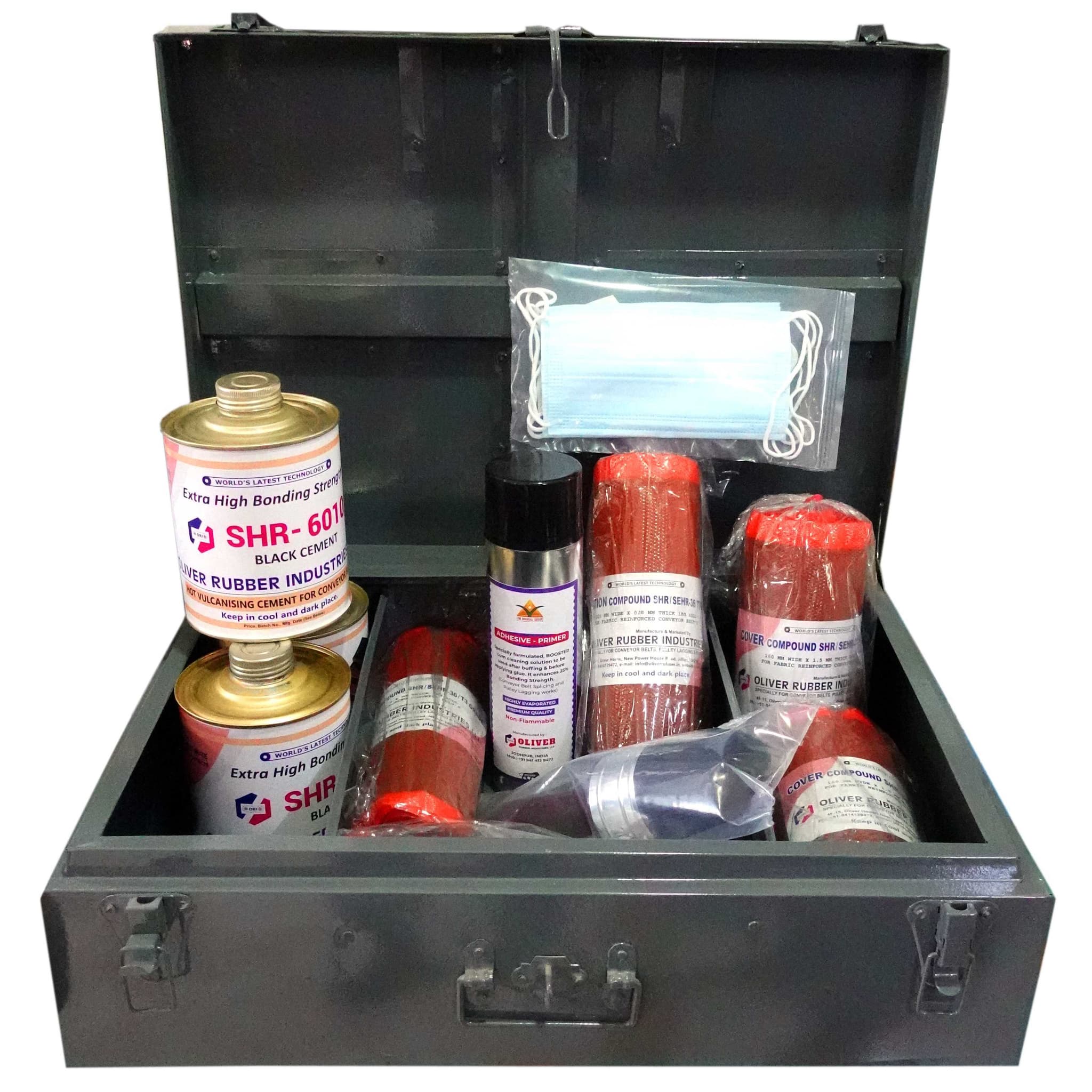 Hot Vulcanizing Kits (Fabric Belt)
Kit Contains following items * Hot vulcanizing Black Solution * Cover Compound * Insulation Compou...
.jpg&w=2048&q=75) Hot Vulcanizing Kits (Fabric Belt)
Hot Vulcanizing Kits (Fabric Belt)Kit Contains the following items *Hot vulcanizing cement *Cover Compound *Insulation Compound *Tie...